

Word Mania
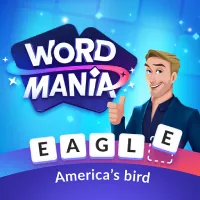
Word Mania hands you a pile of letters rather than a tidy row, and asks you to find what is buried in it. Extract a word, the stack shifts, and what is underneath becomes reachable.
The difference between this and a plain anagram game is that the pile has depth. A letter you need may be under three others, which means the order you take words in decides which words remain available. That is a small change and it turns the game from vocabulary into planning.
People who do well at this are not the ones with the largest vocabulary. They are the ones who search in a fixed order instead of waiting for a word to occur to them.
How to play Word Mania
Letters are stacked on the board. You build words from what is exposed.
- Select letters to spell a word.
- Valid words clear and the stack settles.
- Letters that were buried become available.
- Longer words are worth more.
- Clear the stack, or reach the target, to finish the level.
Depth changes the problem
In a normal anagram game every letter is available all the time, so the only limit is what you can see.
Here, taking an easy word can bury the letter you needed for a longer one, or expose exactly the one that unlocks it. Before submitting anything, glance at what sits underneath the letters you are about to remove.
The phrase chains
Words connect into longer phrases as you go, which is where the larger scores come from. That rewards holding on rather than clearing quickly, and it is the one place in the game where slower play scores better.
Tips and strategy
Search in a fixed order
Left to itself your brain offers up the words you use most, in the order you use them, and then stops. A deliberate sweep produces the ones it would never have suggested.
- Every three letter word first. They are fast and they warm up how you are reading the letters.
- Add S to each of them wherever an S is available.
- Take each three letter word and try one letter on the front, then one on the back.
- Only then hunt for the long word, which by that point is usually half assembled in your head.
Endings do most of the work
ER, ED, LY, ES and ING are the most productive suffixes in English. ING in particular consumes three letters at once, which is often what unlocks the longest slot on a board.
RE, UN, IN and DE on the front do the same job from the other direction.
Watch the vowels
Count them before starting. A pile with one vowel produces short blunt words and there is no point hunting for a nine letter answer. Three or more vowels and the long word almost certainly uses all of them.
Letter pairs English actually uses
TH, CH, SH, ST, TR, PL, BR, CR and NG. If one of these is sitting available, it is nearly always part of an answer. Building from a pair rather than a single letter halves the search.
When the board resists
Stop looking at the whole pile. Pick any three exposed letters and read them in every order out loud. Then pick a different three. It feels mechanical and it is several times faster than staring at the board waiting for something to appear.
What most players leave behind
Plurals. Almost every board has an S somewhere, and almost every noun found is worth checking again with it attached. It is the single largest source of missed points in every game of this type.
Score the long word, but not first
Longer words are worth more, which tempts people into hunting for the biggest possible answer before entering anything.
That is backwards on a stacked board. Every short word you take reshapes the pile, and the long word you were looking for may not have been available yet. Clearing the easy layer often exposes the letters that make the big word possible, so the sequence that scores highest usually starts with the words that score least.
The exception is when a long word is already fully exposed. Take that one immediately, because the next clear may bury a letter it needs.
Word length and the clock
If the level is timed, short words also keep the board moving, and a board that moves gives you new material. Standing still to search for a nine letter word while the timer runs is the most expensive habit in the game.
Other word games here
Word Sauce and Free Words set the same problem with different presentation, Words From Words: Sea adds a crossword grid to fill, and Outspell is the version where you play against an opponent. More in word.
More games like this
Play our free daily puzzles See all →
Made by us. One a day, the same for everyone, no sign up.

Last updated
Frequently asked questions
How does Word Mania work?
Letters are stacked in a pile rather than laid out in a row. You build words from the exposed letters, and clearing them reveals what was underneath.
Does the order I find words in matter?
Yes, and this is what separates it from a normal anagram game. Removing letters can bury or expose others, so an easy word can cost you a longer one.
What is the fastest way to find more words?
Search systematically rather than waiting for inspiration. All the three letter words first, then plurals, then those words with one letter added at either end.
Which endings are worth trying?
ER, ED, LY, ES and ING. The last one uses three letters at once and frequently unlocks the longest word on the board.
What do most players miss?
Plurals. If an S is available, nearly every noun already found is worth entering again with it attached.
Is it free?
Yes, free in the browser with nothing to install.